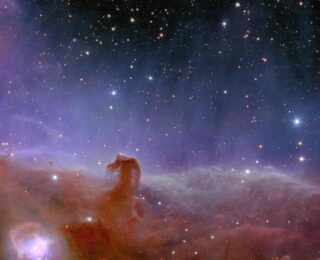
by Sowkhya Shanbhog | Feb 27, 2024 | Daily Paper Summaries
This article reveals how the magnetic field, surpassing internal forces like gravity and turbulence, prevents star formation in the Horsehead nebula. This discovery highlights the crucial role magnetic fields play in shaping stellar nurseries, paving the way for further investigations into the intricate interplay between magnetic forces and star formation.
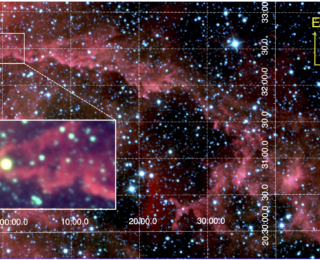
by Diana Solano-Oropeza | Feb 22, 2024 | Daily Paper Summaries
Astronomers will literally see a very young star running away from its peers and call it a RATT.
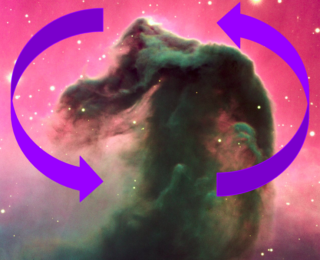
by Delaney Dunne | Sep 4, 2023 | Daily Paper Summaries
All galaxies are a complex ecosystem of interactions between hydrogen gas and stars. In today’s paper, the authors look at the Horsehead Nebula to narrow down the details of those interactions.
by Delaney Dunne | Aug 30, 2023 | Daily Paper Summaries
It’s really hard to see molecular hydrogen (the fuel that makes stars) directly, so astronomers have to use other spectral lines to guess how much is there. In today’s paper, the authors discuss how to do that in the smallest galaxies in the universe!
by Sumeet Kulkarni | Jun 7, 2023 | Career Navigation, Current Events, Interviews, Personal Experiences
Learn all about beautiful planetary nebulae with Joel Kastner at his plenary talk at #AAS242 this afternoon! We interviewed Kastner about his journey into astronomy here:
by Aldo Panfichi | May 30, 2023 | Daily Paper Summaries
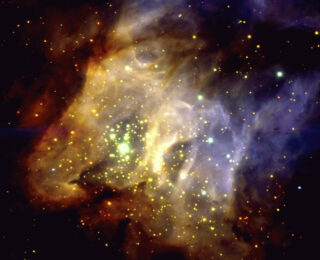
In today’s paper, the authors describe and attempt a method to trace the evolution of our galaxy by comparing the ratio of oxygen isotopes in different regions of the Milky Way!
