Source Needed: Could Signal Confusion Hurt Next-Gen Gravitational Wave Detectors?
Today’s paper takes a prospective look at possible concerns for future gravitational wave observations, and finds that perhaps no concern is needed.

Today’s paper takes a prospective look at possible concerns for future gravitational wave observations, and finds that perhaps no concern is needed.

This radio signal has been around longer than Sega Genesis.
Do magnetars have flux ropes that look like giant muscular arms? No, but they have some magnetic arches with the muscle to rip light apart!
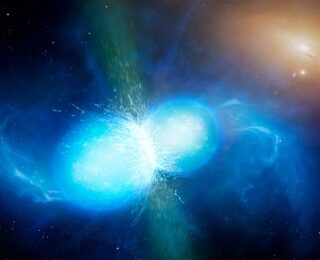
A bright flash of high-energy gamma rays heralds the merger of two dense neutron stars. What’s left behind? For the first time, authors have detected a follow-up radio burst which may hint at the nature of the merger’s remnant.

We interviewed Prof. Renee Ludlam of Wayne State University to learn all about neutron stars ahead of her plenary talk at #AAS243!
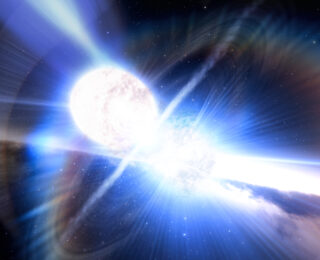
Today’s authors discuss prospects for observing neutron star – black hole mergers in multiple messengers!